
6 Factors That Decide Inverter Battery Performance:

Even the Best Battery for Inverter Needs the Right Conditions

When power cuts hit, the inverter battery becomes the silent hero of every home, shop, office, and clinic. But whether it lasts two years or six isn’t just luck, it depends on how it’s built, how it’s used, and how it’s cared for. If you want performance close to the best battery for inverter, these factors matter more than anything else. In this blog, we are going to understand the 6 factors on which inverter battery performance depends on.

Factor on which battery performance depends –

1.Battery Type 

Not all inverter batteries are made the same. Flat plate batteries are good for occasional power cuts, while tubular batteries are designed for places where outages are frequent. Lithium batteries are technologically advanced and they need no maintenance. The thickness of plates, quality of materials, and internal design play an important role in how long the battery lasts. So if you are choosing the best battery for inverter, then choose your battery type wisely.

2.Charging Quality & Care

Even the strongest battery can fail early if the charging is not properly done. Irregular charging or overcharging damages the plates from inside. A smart charging system, stable electricity supply, and a compatible inverter ensure that your battery ages gracefully and performs well.

3.Usage Pattern & Connected Load

Every battery has its limits. Running too many heavy appliances during power cuts forces it to work harder. This leads to it wear out faster. Using the backup wisely and avoiding deep discharge help maintain battery performance.

4.Regular Maintenance & Upkeep

For conventional inverter batteries, maintenance is not optional. Checking water levels, cleaning terminals, preventing rust, and keeping the battery dust-free can add years to its life. Neglect, on the other hand, is the fastest way to shorten battery lifespan, even if the product initially belonged to the best battery for inverter category.

5.Installation & Environmental Conditions

Heat, moisture, dust, and poor installation silently damage batteries. A cool, dry and  well-ventilated place is ideal for battery installation. Proper wiring and secure connections ensure stable performance and reduce the risk of overheating.

6.Battery Quality 

Not every battery is engineered the same. Trusted brands like Sakthi focus on strong build quality, robust plate design, and reliable materials. A good warranty, trusted dealer support, and proven field performance are strong indicators of battery longevity, and this is what truly separates an ordinary product from the best battery for inverter.

Final Thought

An inverter battery’s life isn’t decided in a factory alone. It depends on how you choose and maintain it. When you combine good habits with a trusted brand, you get power you can rely on. If you are looking for best battery for inverter,  then you can choose batteries from Sakthi. They offer robust tubular inverter and lithium-ion batteries. Choose Sakthi. Choose reliable power.

FAQs
  1. Does heat really damage inverter batteries?

Absolutely. Heat speeds up internal reactions and shortens lifespan.

  1. Do frequent power cuts reduce battery life?

Yes. Frequent deep discharging affects the battery, so choosing the right capacity is important.

  1. How often should I top up battery water?

Generally every 3–6 months, depending on battery type and usage. Always use de-mineralised water.

 

How Tubular Batteries Work and Why They Last Longer

Tubular batteries are being used a lot these days. From homes to offices, people rely on them. People prefer them because they give steady backup power and don’t give up easily, even after years of regular use. Many like them for inverters. They give steady power and last a long time. If you are looking to buy the best tubular battery for inverter use, then knowing how they work will help you make the right decision. In this article, let us understand what tubular batteries are and how they function in daily use?

Understanding Tubular Battery?

A tubular battery is a type of lead-acid battery. It is made for deep discharge. That’s why it is good for inverters and solar systems. Flat plate batteries are different. Tubular batteries have plates shaped like tubes. The active material sits inside the tubes. It doesn’t fall off easily. That makes the battery stronger. It also helps it last longer.

You will see tubular batteries in homes, small offices, shops, and industries. Anywhere long backup hours and steady power are needed.

How Tubular Batteries Work

Tubular batteries work with a simple chemical reaction. The Lead plates are placed into an electrolyte solution which is made of diluted sulfuric acid. When the battery charges, electricity changes into chemical energy. When it discharges, the energy turns back into electricity. That powers your inverter. The negative plates are the same as the flat plate batteries. The positive plates are different from normal batteries. The active material is packed inside tubular spines. It doesn’t shed even after many cycles. That is why the battery keeps working well for years.

Why Tubular Batteries Last Longer

The long life isn’t by accident. It comes from smart design and better materials. Tubular plates reduce corrosion. They also reduce the loss of active material. That lets the battery handle deep discharges without damage.

Heat tolerance is another reason. In India, batteries face high temperatures. Tubular batteries handle the heat well. Performance stays steady. That’s why people prefer them, especially where power cuts are frequent.

Performance During Power Cuts

Sometimes power cuts are for longer durations and sometimes for short duration. Hence it is important to have a trusted battery. Tubular batteries give steady backup. Voltage stays stable. Fans, lights, computers, and electronics stay safe. The best tubular battery for inverter handle deep discharge, they recover well after long use.

How to care for a tubular battery

Tubular batteries stand strong. But small care helps them last longer. Check electrolyte levels regularly. Add distilled water if needed. The terminals have to be kept clean. The battery has to be placed in an area where there is good airflow. With proper care, a tubular battery can last 8 to 10 years. That makes it a cost-effective solution.

Modern Energy Needs

Energy needs are growing. Backup power is important. Tubular batteries work well with inverters and solar systems. They store energy efficiently. They release it smoothly. If you want reliable performance and long life, choosing the tubular battery for inverter is a smart choice.

Conclusion

Tubular batteries last long. Their strong design, deep discharge ability, and steady performance make them perfect for inverters. With care, they give years of backup. That’s why homes and businesses trust them.

If you are planning to invest in best tubular battery for inverter, Sakthi tubular batteries are built for real Indian conditions. They offer strong performance, long life, and dependable backup during frequent power cuts. Choose Sakthi for steady power you can trust, day after day.


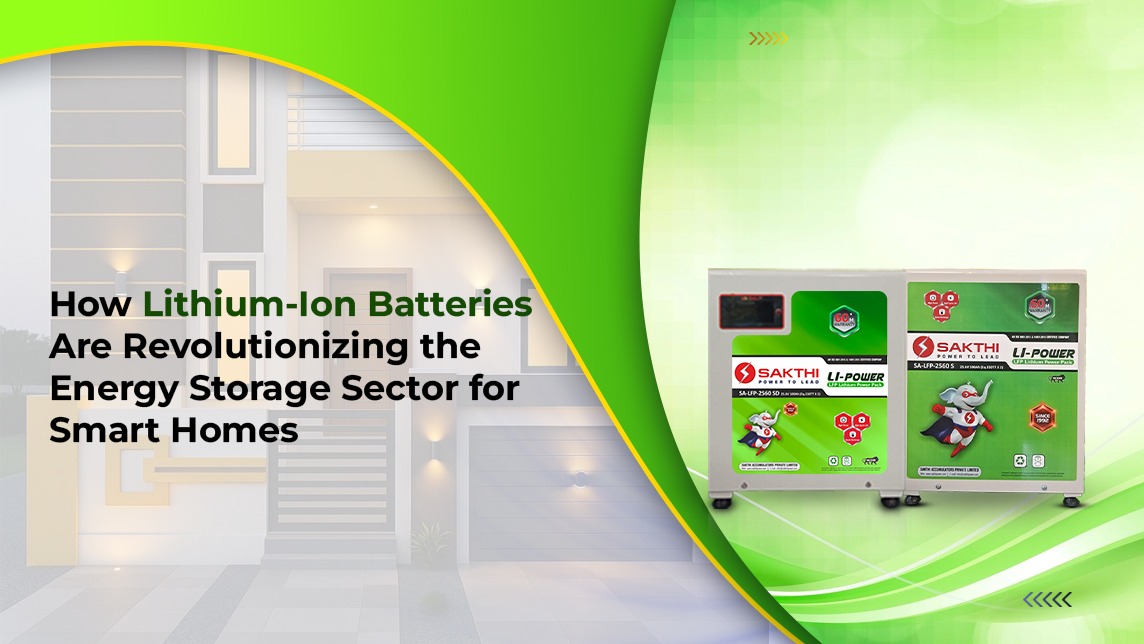
How Lithium-Ion Batteries Are Revolutionizing the Energy Storage Sector for Smart Homes

Think about this question: what’s the point of having an inverter if the battery can’t keep up when the power really goes out?

Power outages are unpredictable but always stressful. Lights drop, work pauses, and comfort disappears in seconds. This is exactly why lithium-ion inverter batteries have become the preferred choice for people who want backup power they can trust. And  Sakthi Accumulators, India’s best-known lithium-ion battery manufacturer offers Lithium-ion inverter batteries that have raised the bar in terms of performance and reliability.

Why Lithium-Ion Makes Inverter Backup Better

Traditional inverter batteries do the job, but they demand time and attention. They’re bulky, slow to charge, and need regular checks. Sakthi, one of the leading  lithium-ion battery manufacturers, manufactures  Lithium-ion that removes all that friction.

You get a compact, efficient, and cleaner power solution built for daily use.

Faster Charging, Better Readiness

One of the biggest advantages is how quickly it charges. With older batteries, waiting for a full recharge after a long outage felt never-ending. Lithium-ion inverter batteries shorten that wait drastically. Even if the power drops several times a day, the battery bounces back fast and stays ready for the next cut.

Longer Life With Lower Hassle

Durability is where a lithium-ion inverter battery truly shows its worth. Sakthi focus heavily on high-quality cells and built-in safety systems, which helps:

  • Reduce heating
  • Preserve charge for longer
  • Maintain performance under continuous load

Because the internal structure stays stable, the battery’s lifespan increases naturally. You save on maintenance and avoid the stress of frequent replacements.

Consistent and Predictable Backup

Many users complain about fluctuating backup times with older inverter batteries. Lithium-ion handles this better. A solid battery management system (BMS) ensures stability by monitoring:

  • Temperature
  • Cell balance
  • Charge and discharge patterns

The result? Consistent backup without sudden drops in output. For homes and offices depending on routers, lighting, and essential devices, this reliability makes a noticeable difference.

Simple Monitoring Features

Sakthi Accumulators, one of India’s most trusted lithium-ion battery manufactures, builds inverter batteries that support smart monitoring. With a simple app, users can easily check:

  • Battery health
  • Temperature
  • Remaining backup time

This removes guesswork and helps prevent sudden shutdowns.

Convenience + prevention = smoother daily use.

Designed for Local Conditions

Heat, inconsistent usage, and repeated outages can exhaust badly built batteries. But when the product is engineered in Sakthi Accumulators, India’s best-known lithium-ion battery manufacturer, who understands what the battery must endure. Local testing makes the final product more suitable for real, everyday conditions.

Why Upgrading Makes Sense

For anyone planning to improve their inverter setup, a lithium-ion inverter battery isn’t a luxury anymore. It is the smarter long-term choice because it offers:

  • Faster charging
  • Stable output
  • Longer lifespan
  • Lower maintenance
  • Compact form factor

As a trusted Lithium-ion manufacturer, Sakthi delivers high-quality inverter batteries that perform with excellence.

FAQs

  1. Does it require routine maintenance?

No. There are no water top-ups or heavy service needs.

  1. Can it run common appliances and office essentials?

Yes. Fans, lights, routers, and most work devices run smoothly.

  1. Does it charge faster than regular inverter batteries?

Absolutely. Quick charging is one of its biggest strengths.

How to Maintain Your Inverter Battery for 40% Longer Life 

Even the best tubular battery for inverter loses capacity faster when heat, sulfation and irregular charging interfere with its internal chemistry. Since these reactions build up silently, users often wonder why their best battery for inverter weakens despite proper use. The answer lies in measurable electrochemical behaviour, not assumptions. That’s why Sakthi Accumulators, an experienced Tubular Battery Manufacturer, recommends a maintenance routine that directly slows chemical wear.

In this blog, Let’s see 5 steps that significantly extend battery life.

Controlled Temperature Slows Plate Corrosion (20°C–30°C Range)

Heat accelerates lead corrosion and increases water loss. Studies show that every 8–10°C rise doubles chemical degradation speed. Why it matters:

  • Tubular plates react more aggressively above 35°C.
  • Higher temperature reduces electrolyte density.
  • Backup time drops by up to 20%.

Keeping the inverter in a ventilated, shaded area keeps the battery for the inverter chemically stable and improves overall lifespan.

Full Charging Prevents Hard Sulfation (Major Life Killer)

When charging stays incomplete, soft sulfate crystals harden and become irreversible. This directly reduces plate activity. Scientific basis:

  • Full charging converts sulfate back into active material.
  • Incomplete charging increases internal resistance.
  • Voltage dips become frequent.

This is why the battery for inverters should always be allowed to fully recharge after every outage.

Balanced Electrolyte Ensures Ion Flow and Plate Health

Electrolyte level determines how efficiently ions travel within the battery. When plates stay exposed, oxidation begins immediately.

  • Low electrolyte reduces capacity by 25–30%.
  • Impure water increases sediment formation.
  • Incorrect levels disturb acid concentration.

Checking electrolyte every 30–45 days helps maintain the same chemical balance.

Clean, Tight Terminals Reduce Heat and Internal Resistance

Dirty or loose terminals create resistance, which generates heat and slows charging speed. Scientific connection:

  • Resistance spikes cause micro-heating.
  • Corrosion interrupts current flow.
  • Plate stress increases during discharge.

Cleaned and tightened terminals help deliver smooth, uninterrupted power.

Avoiding Deep Discharge Protects Active Material Structure

Discharging the battery below 20% remaining capacity accelerates active material shedding. Proven outcomes:

  • Deep discharge shortens cycle life by 30–40%.
  • Plate structure weakens under high load.
  • Tubular plates lose surface area over time.

Using essential loads only during long outages helps the Inverter battery stay structurally strong for years.

A Practical Path to Longer Battery Life With Sakthi

When these steps are applied consistently, inverter batteries experience significantly slower chemical wear. That’s why tubular battery for an inverter lasts longer when kept cool, fully charged and chemically balanced. The routine is simple, but its impact is measurable across actual field data.

If you prefer a battery designed for heat, frequent outages and long backup performance, consider Sakthi, trusted as a Tubular Battery Manufacturer in India. High-density plates and balanced electrolytes always create longer-lasting backup power.

FAQs

Q1. How often should I check the electrolyte level?

Every 75 – 90 days. This helps maintain chemical balance and prevents plate oxidation.

Q2. Can heat really reduce battery life?

Yes. Heat speeds up corrosion and reduces electrolyte density, which shortens cycle life.

Q3. Does a Sakthi tubular battery last longer than a flat-plate battery?

Yes. Tubular plates handle heat better and support deeper cycling, making them the best battery for inverters in most households.