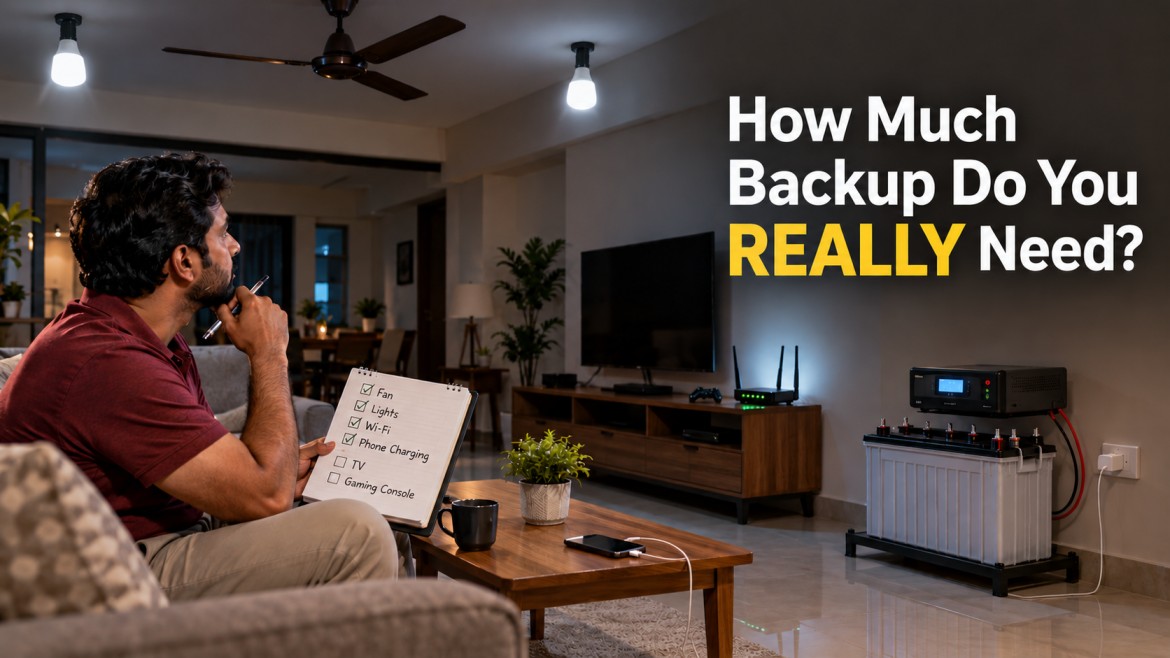
Selecting a battery for a company will be entirely different from picking one for home usage. A power outage at home could simply translate into switching off the TV set or waiting for the power to come back on. In case of a retail store, health center, office, or any other commercial establishment, power failure could mean that the billing system, internet facility, CCTV, computer facilities, communication channels, and customer service will be down.
This is why an honest Battery Manufacturer evaluates battery requirements for businesses in a completely different way. The selection process cannot start with cost or battery capacity. Instead, it needs to start with one question: what will fail upon a power outage?
Downtime Has A Real Business Cost
Imagine an active shopping complex in the evening, where the lights can probably still function, but the billing computer, Wi-Fi routers, CCTV systems, and card machine would all require electricity.
Should the backup system fail, there could be delays for customers, interruptions in digital payments, problems with the billing system, and staff might lose access to necessary systems.
In a clinic, the scenario would look differently. The reception computers, internet, basic equipment, lighting, and security systems might all require continuous backup. An office might have laptops, desktops, routers, and communication tools.
These examples illustrate how the function of a battery is directly linked to daily activity.
Thus, a business owner needs to think about more than just, “How many hours of backup can I get?” But rather, “What functions need to be maintained during this time?”
Start With Critical Loads
Prior to deciding on an Industrial Battery or Commercial Backup Solution, split the load into two separate parts.
The first part will consist of critical loads. These could be your billing systems, routers, CCTV cameras, emergency lighting, computers, or communication tools.
The second one will consist of loads that can be turned off in case of a prolonged power failure.
Such a simple step helps to prevent oversizing your battery as well as its under-sizing and discovery of the latter during the first significant power failure.
A decent Battery Manufacturer would enquire about the real load before making any suggestions.
Backup Time Is Only Half The Story
While commercial customers tend to be concerned about the runtime of the battery, the time of charging is no less important.
For example, consider that during the day, a store has experienced an outage lasting two hours. An hour later, another one begins. If the battery does not have enough power accumulated in it during that hour, then when the next outage happens, there will be less backup available.
It is crucial for regions where there are frequent outages.
The charge process, the inverter, the battery capacity, and the time available for charging all need to fit together. Although the bigger battery has a greater capacity, the inappropriate charging system may make the charging time longer.
That is why companies need to discuss both discharging and charging needs with their Battery Supplier.
Commercial Usage Can Be More Demanding
A home backup is usually pretty straight forward with just a couple of fans and light bulbs functioning till power comes back on.
Commercial uses are different with possibly extended hours of operation and varying loads throughout the day. A retail store might be more active in the evenings. An office might make full use of its equipment during set working hours. A medical clinic might require a critical backup when there are patients around.
This is why an Industrial Battery must be chosen based on the actual requirement rather than from a capacity table.
The installation environment will play a part too. Batteries that are installed in hot, ill-ventilated, dusty, and wet environments will not give their best performance. The cables, settings of the inverter, and terminal connections must also be verified at the time of installation.
Service Support Matters More For Businesses
While a home battery has some issues, it’s quite an inconvenience. With a commercial battery, however, the business may experience downtime.
The importance of timely service then becomes evident.
Before purchasing batteries, it would be wise to find out who will take care of installation, warranty service, inspections and service complaints. It would be prudent to ensure that spare parts or suitable battery types are available.
An efficient Battery Supplier should go beyond just supplying a product list. Proper guidance in product use and post sales services will help avoid unnecessary downtime.
As a Battery Manufacturer, Sakthi realizes that commercial customers require practical solutions. The needs of a shop, clinic, office and a commercial building may all be similar, but the right solution could be entirely different in each case.
Think About Total Value, Not Only Purchase Price
The most inexpensive battery does not automatically represent the lowest cost alternative to any business venture.
In cases where an inappropriate battery leads to constant maintenance problems, limited backup duration, slow charging and premature replacement, the savings may prove illusory.
The Commercial buyer must factor in the battery’s capacity, its suitability, warranty and compatibility, amongst other factors.
An ideal Industrial Battery should allow the business to carry out its functions efficiently without complications.
Final Thoughts
The approach to purchasing batteries for commercial purposes is different due to the higher costs associated with downtime.
Right purchasing begins with critical loads, working hours, outage time, battery charging time, environmental conditions, and other parameters. The price and capacity are important considerations too, but only after an understanding of the application.
An efficient Battery Manufacturer will assist companies in choosing the battery depending on how the company functions, not by the biggest numbers indicated in the specification sheet.
The best battery for the commercial purposes is the one that allows keeping the critical processes functioning during outages.
FAQs
1. How Is A Commercial Battery Different From A Home Battery Requirement?
Commercial systems often support critical equipment for longer working hours. Therefore, load planning, recharge time, and service support become more important.
2. What Should A Business Check Before Buying An Industrial Battery?
Check the critical load, required backup time, charging system, installation space, power-cut frequency, and service availability.
3. Does A Bigger Battery Always Suit A Business Better?
No. A bigger battery must still match the inverter, charging capacity, and actual business load.
4. Why Is Recharge Time Important For Commercial Backup?
If another outage happens before the battery has recovered, the business will begin the next power cut with less stored energy.
5. Why Should Businesses Choose A Reliable Battery Supplier ?
A reliable supplier can help with product selection, installation guidance, warranty support, and service, which reduces avoidable downtime.